
What is a Thermal Relay?
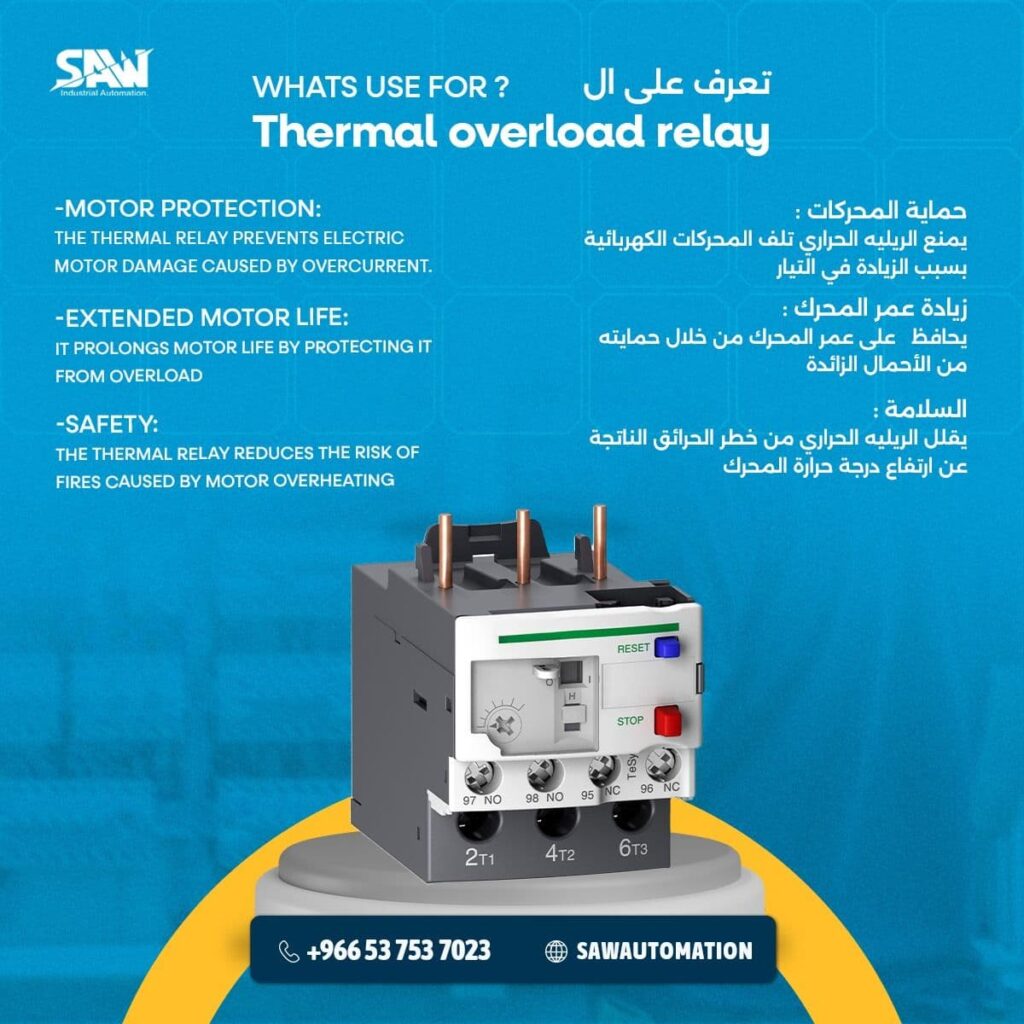
What is a thermal relay? This question is frequently asked by professionals in the electrical and industrial maintenance fields, as this device is considered one of the most important protection tools against overcurrent and excessive load. Although its working principle is relatively simple, it plays a critical role in protecting motors and equipment from damage. Therefore, this article explains the concept of the thermal relay, how it works, its types, and the key advantages and disadvantages of using it.
What Is a Thermal Relay?
A thermal relay is an electrical protection device designed to intervene when current increases or when the load in a circuit becomes too high. When the temperature rises due to excess current, the relay automatically disconnects the circuit to prevent damage or severe faults.
The relay relies on several internal components that react to heat and current, providing effective protection in many industrial and household applications. Its main components include:
- Bi-metallic strips: Detect abnormal temperature rise.
- Electrical connectors: Transfer current to the relay.
- Trip mechanism: Disconnects the circuit when required.
- Visual indicators: Show the cause of tripping, whether due to overheating or a fault.
- Current adjustment settings: Allow configuring the appropriate current level for protection activation.
How Does a Thermal Relay Work?
The thermal relay works based on the principle of metal expansion caused by heat. When the current exceeds the allowable limit, the bi-metallic strip (bimetal) heats up and bends, causing the relay to trip and disconnect the circuit.
Some types work using a disc made of a high thermal coefficient material known as PTC. At the beginning of operation, the resistance is low; however, as temperature increases due to higher current, resistance rises significantly, leading to the disconnection of the starting coil from the circuit.
Once the current stops, the disc gradually cools, allowing the resistance to return to its normal state, making the relay ready to operate again. Consequently, this system provides reliable protection that prevents excessive current from reaching the motor or device.
What Is the Function of a Thermal Relay?
Thermal relays serve several essential functions, including:
- Protecting household appliances: Such as air conditioners and washing machines from overloads.
- Protecting industrial motors: From excessive current caused by heavy loads.
- Maintaining commercial circuit efficiency: By monitoring loads and responding when necessary.
- Preventing equipment shutdown: By disconnecting the circuit before excessive heat causes motor damage.
Whenever a thermal relay trips, it is essential to identify the root cause before restoring operation, as restarting without addressing the issue may lead to more severe failures.
Types of Thermal Relays
Thermal relays vary depending on operating mechanisms and applications. The most common types include:
Magnetic Relay
Based on magnetic force, it opens or closes the contacts when the current level changes. It is widely used in industrial applications requiring fast response.
Solid-State Relay
This type operates using electronic components such as transistors and thyristors. Therefore, it offers fast response with no moving parts.
Overload Relay
The most commonly used type for protecting household and industrial devices from overheating, particularly in single- and three-phase motors.
Protection Relay
Continuously monitors current levels and is used in large systems to prevent faults before they occur.
Latching Relay
Maintains its state (open or closed) even after power loss, helping reduce energy consumption in some applications.
Time-Delay Relay
Uses a timer to delay activation or deactivation for a specified period before operating the circuit.
Advantages and Disadvantages of Thermal Relays
Advantages
- Easy installation and simple operation.
- Reliable overload protection for motors.
- Option for manual or automatic reset depending on the type.
- Cost-effective compared to other protection devices.
- Allows fault diagnosis through built-in test buttons.
- Thermal compensation enables performance stability across varying temperatures.
Disadvantages
- Slower response time compared to modern electronic protection devices.
- Does not provide ideal protection against short circuits.
- Performance may be affected by environmental conditions, especially high ambient temperatures.
- Accuracy varies due to reliance on thermal characteristics.
- Not suitable for extremely high-load applications.
- Requires a cooling period before becoming operational again.
The Importance of Regular Maintenance
To maintain optimal relay performance, regular maintenance is necessary. Basic steps include:
- Inspecting internal components for signs of wear or damage.
- Cleaning dust and debris that may affect sensitivity.
- Ensuring proper current adjustment based on device or motor specifications.
- Monitoring relay performance during operation to confirm timely response.
With proper maintenance, the thermal relay provides reliable protection for various motors and devices, extending equipment lifespan and ensuring safe and stable performance.