
How to Choose the Right Temperature Controller for Industrial Use
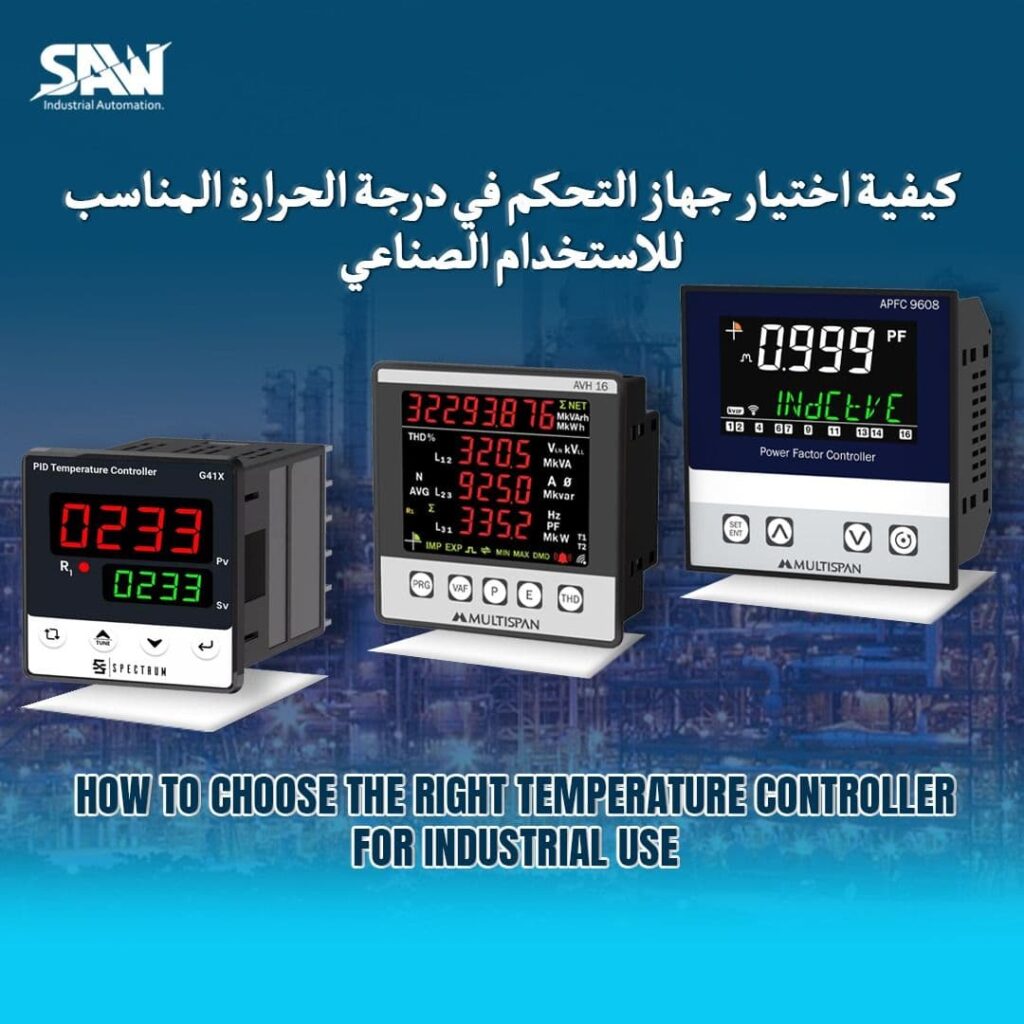
How to Choose the Right Temperature Controller for Industrial Use. Selecting a temperature controller in industrial environments is not just filling in technical data. The decision depends on understanding the process, the operating environment, and performance requirements. Whether you work in a food factory or a chemical production line, choosing the wrong device may lead to unexpected downtime, product damage, or even safety risks.
How to Choose the Right Temperature Controller for Industrial Use
Don’t worry—this guide explains the essential steps clearly and practically. The goal is to help you make the right decision from the start.
What Is a Temperature Controller?
A temperature controller is a device that maintains a specific temperature inside an industrial system or environment. It works like a home thermostat, but with higher precision and the ability to withstand harsh conditions. The device relies on a sensor to read the temperature, compares the actual value to the setpoint, and if there is a difference, it sends a signal to activate heating or cooling.
Industrial systems require very precise control because they handle sensitive materials or large quantities, making even a small error extremely costly.
Why Do Industrial Applications Need Accurate Temperature Control?
Temperature is a critical factor in the quality of industrial products. For example, high temperatures in a metal treatment furnace may cause cracking, while low temperatures may weaken the product.
Temperature fluctuations can cause several problems, such as:
- Product damage
- Increased energy consumption
- Higher maintenance costs
- Safety risks for workers
Because of these issues, modern controllers maintain stable temperature using real-time feedback, automatic adjustment, and alarms. This is especially important in factories in Saudi Arabia that operate continuously.
Types of Industrial Temperature Controllers
Before choosing a controller, you should understand the main types and characteristics of each.
1. On/Off Controllers
These controllers turn the load fully on or off when needed. They are simple, inexpensive, and suitable for non-critical applications like water tanks.
2. Proportional Controllers
These provide gradual control instead of simple on/off switching. They are recommended when the process is sensitive to sudden changes or when higher energy efficiency is required.
3. PID Controllers (Proportional–Integral–Derivative)
These are the most accurate. They combine quick error correction, deviation elimination, and prediction of future changes. They are used in advanced industries such as pharmaceuticals and chemical processing.
However, they require proper tuning. If you’re not familiar with tuning PID, you can rely on technicians or choose a unit that supports auto-tuning.
Understanding the Application Environment
Before choosing a device, ask yourself: Where will it be used?
Temperature Range
Some processes require low temperatures, while others exceed 1000°C. You must choose a controller that supports the required range with a safety margin.
Environmental Conditions
Industrial environments in Saudi Arabia may include humidity, dust, and high temperatures. Therefore, you should consider:
- IP protection rating
- Housing material
- Cooling systems
- Vibration resistance
Power Requirements and Load Type
Make sure the controller matches the voltage and current at your site, such as 220V or 380V. Load types also differ—heaters are easier to control compared to motors, which require additional equipment.
Sensor Compatibility and Input Types
Thermocouples
Common, fast, and capable of handling high temperatures. The most famous types are:
- Type K: up to 1250°C
- Type J: high accuracy at lower temperatures
RTDs (e.g., PT100)
More accurate and less affected by electrical noise, but slower and cannot withstand very high temperatures like thermocouples.
Infrared Sensors
Non-contact sensors suitable for moving or extremely hot objects, but sensitive to dust and steam.
Controller Features and Interface Options
Display and Ease of Use
Choose a controller with a clear screen and easy menus. Ideally, it should support Arabic in factories within the Kingdom.
Communication and Integration
Important communication options include:
- Modbus
- Ethernet
- RS-485
- Wi-Fi or Bluetooth
Installation and Mounting Requirements
Temperature controllers come in two main mounting options:
- Panel-mounted: Suitable and well-ventilated for control panels.
- Wall-mounted or DIN rail: Great for open spaces and easy maintenance.
Energy Efficiency
Proper PID tuning can reduce energy consumption by up to 20%. The larger the process, the greater the savings.
Cost vs. Value
A cheaper controller may seem attractive, but it often costs more in the long run. A high-quality unit reduces downtime, saves energy, and offers better technical support.
Conclusion
Choosing the right industrial temperature controller depends on the process type, working environment, power requirements, and sensor type. Each factor directly affects performance. Always review the technical details before making a decision to ensure reliable operation at the highest quality and lowest cost.