The Importance and Benefits of Liquid Level Controllers
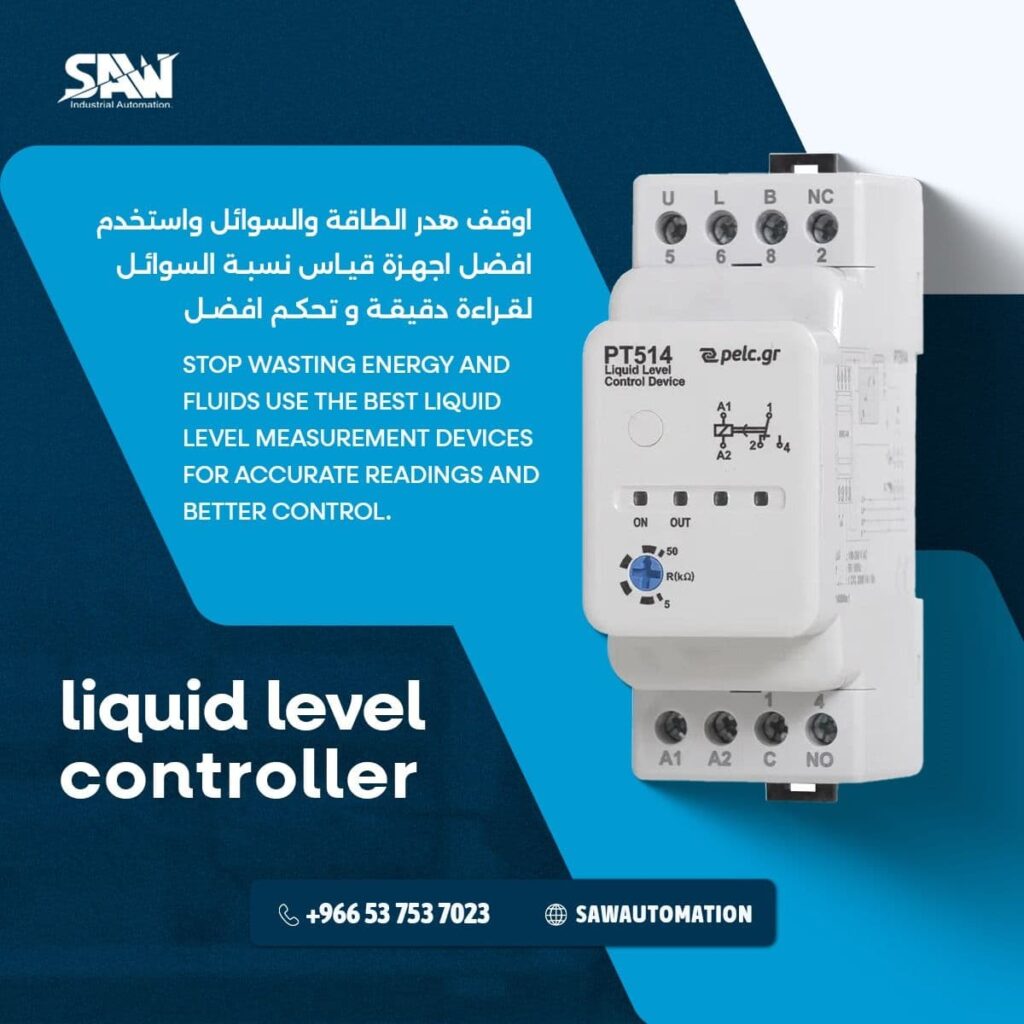
The Importance and Benefits of Liquid Level Controllers The importance and benefits of a liquid level controller have become increasingly clear across industrial and agricultural sectors. These devices play a fundamental role in accurately and safely monitoring fluid levels in tanks. Moreover, with the rising dependence on automation, the need for continuous and reliable fluid control systems has grown significantly—without requiring direct human intervention.
What Is a Liquid Level Controller?
A liquid level controller is designed to automatically monitor and regulate the level of liquids using modern technologies such as floats, sensors, and electronic circuits. When the liquid level drops below the preset limit, the controller activates the pump. Conversely, once the liquid reaches the maximum level, it automatically stops the pump. Consequently, this prevents overflow, flooding, or leakage.
The Importance of Liquid Level Control Systems
The importance of liquid level controllers spans several essential aspects, including:
Enhancing Operational Efficiency
These devices significantly improve the efficiency of industrial operations. By maintaining precise liquid levels, equipment can operate continuously without interruptions caused by excessive or insufficient fluid.
Maintaining Product Quality
Food and pharmaceutical industries rely heavily on specific liquid levels during production. Therefore, the controller ensures consistent results and high-quality output throughout the production line.
Improving Safety Measures
In facilities handling hazardous liquids, the controller reduces the risk of leaks that may cause environmental or health hazards. The more controlled the liquid levels are, the safer the working environment becomes.
Resource Conservation
By preventing overflow and leakage, these devices minimize waste and preserve natural resources. Consequently, operational costs decrease over time.
Cost Savings
Automated monitoring reduces the need for frequent manual inspections, lowering labor costs. Additionally, the controller protects equipment from overflow-related damage, which helps reduce maintenance expenses.
Overall, a liquid level controller increases productivity, reduces operational costs, protects equipment, and minimizes environmental pollution risks.
Benefits of Liquid Level Controllers
- Managing water levels in household tanks.
- Regulating irrigation systems and preventing soil saturation or dryness.
- Controlling liquid levels in industrial systems and operational processes.
- Remote monitoring capabilities in modern systems.
- Reducing energy consumption and lowering electricity bills.
- Ensuring a long service life due to precise automated operation.
- Protecting the environment from leaks that could contaminate water or soil.
How Do Liquid Level Controllers Work?
Liquid level controllers rely on several detection mechanisms, and the most common include:
Float-Based Systems
These systems use a floating device that rises and falls with the liquid level, sending signals to indicate whether the level is low or high.
Conductive Sensors
These sensors operate when the liquid is electrically conductive. They detect the liquid level by measuring conductivity differences.
Optical Sensors
Optical sensors rely on light reflection to identify liquid levels. When the reflection changes, the system sends a signal to start or stop filling.
Pressure Sensors
These sensors measure the pressure exerted by the liquid column. As the liquid level rises, pressure increases, allowing the system to calculate the exact level.
Examples of Liquid Level Controller Applications
Residential Use
They help regulate household water tank levels, preventing waste and maintaining stable water supply.
Industrial Sector
Food, chemical, and oil industries rely on these devices to maintain uninterrupted production processes.
Agricultural Sector
These systems regulate irrigation to protect crops from water shortages or excessive watering.
Medical Laboratories
Laboratories use level controllers to manage sensitive liquids such as solvents and chemical reagents.
The Importance of Regular Maintenance
Over time, liquid level controllers may encounter issues due to continuous operation. Therefore, regular maintenance is essential for ensuring consistent performance. Key maintenance tasks include:
- Cleaning sensors from deposits and dust to maintain accuracy.
- Updating software in modern controllers for more stable performance.
- Inspecting mechanical parts and replacing any damaged components.
Tips to Improve Liquid Level Controller Performance
- Clean sensors regularly.
- Conduct comprehensive checks on pumps, wiring, and sensors.
- Test the device periodically to ensure proper response and accuracy.
The Importance and Benefits of Liquid Level Controllers, liquid level controllers have proven their importance in numerous sectors due to their high precision and excellent operational efficiency. Future advancements are expected to make these devices even smarter, more efficient, and better integrated with modern automation systems.